

Yellow Jacket Control in North Richland Hills, TX
North Richland Hills experiences sustained pest pressure year-round, with spring and summer bringing intensified activity across multiple species—a cycle that includes yellow jacket nesting and foraging at their peak. Yellow jacket colonies around homes and property structures can pose a genuine safety concern, particularly as warm months progress and populations grow. Dill Pest Control connects North Richland Hills property owners with local pest control providers who can assess and manage yellow jacket activity, helping protect your family and outdoor spaces from stings and repeated encounters.
Yellow Jacket Control Services for North Richland Hills Homeowners
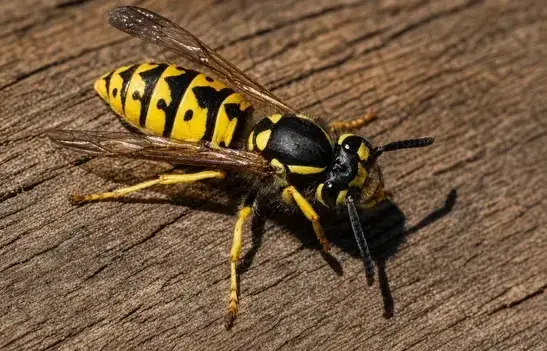
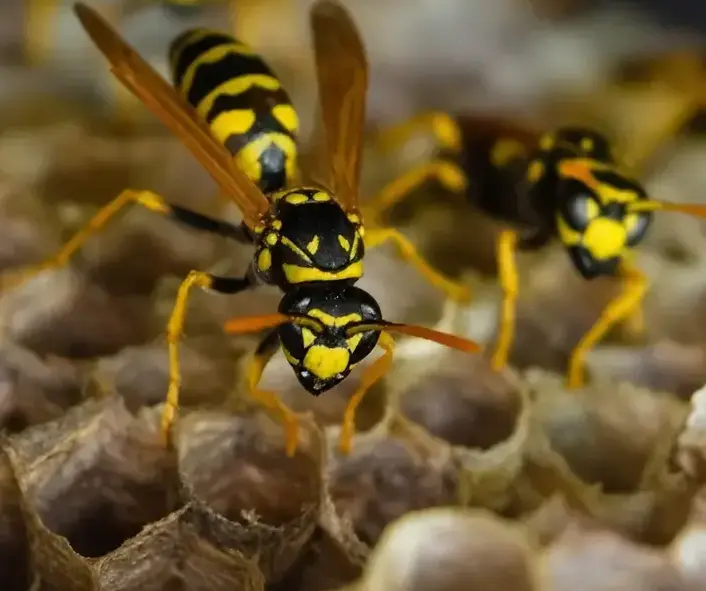
North Richland Hills residents face seasonal pest pressure that intensifies during warmer months, and yellow jackets are among the stinging insects that become increasingly active and aggressive as spring and summer arrive. These wasps are drawn to outdoor spaces where families gather—patios, gardens, trash receptacles, and food preparation areas—and can establish nests in eaves, attics, and ground cavities around residential properties. Unlike some pests that remain dormant during cooler seasons, yellow jacket activity escalates when temperatures rise, making warm-weather months a critical window for prevention and removal. Homeowners in neighborhoods like Smithfield and Diamond Loch, along with other parts of North Richland Hills, often discover nests when outdoor activity peaks, leaving them with an urgent need for safe, effective control before stinging incidents occur.
Dill Pest Control connects North Richland Hills property owners with independent local pest control providers who specialize in yellow jacket identification, nest location, and safe removal. These providers conduct thorough inspections to find active nests and assess risk areas, then implement removal strategies tailored to your property's layout and the nest's location. Follow-up visits help ensure the problem is fully resolved and reduce the likelihood of reinfestation. By partnering with a local provider through Dill Pest Control, you gain access to someone familiar with North Richland Hills' seasonal patterns and ready to respond when yellow jackets threaten your home's safety and comfort.
Why North Richland Hills Homeowners Choose Dill
Fast Yellow Jacket Response
Yellow Jacket nests demand urgent attention. Dill connects you with local providers ready to assess and treat infestations quickly, minimizing risk to your family and property.
Clear Yellow Jacket Treatment Plans
Effective Yellow Jacket control starts with understanding the problem. Independent providers in our network explain nest location, treatment approach, and prevention steps so you know exactly what to expect.
Experienced Local Yellow Jacket Specialists
Yellow Jacket behavior varies by season and location. Dill connects you with independent providers familiar with North Richland Hills conditions who tailor Yellow Jacket removal to your specific situation.
Year-Round Pest Pressure Management
North Texas summers intensify Yellow Jacket activity, but threat persists through cooler months. Dill helps homeowners in areas like Smithfield and Diamond Loch stay ahead with timely Yellow Jacket control and prevention.
How Our Yellow Jacket Treatment Works
Schedule Your Yellow Jacket Control Visit
Contact Dill Pest Control to describe your yellow jacket problem and receive a connection to a local pest control provider in North Richland Hills. The provider will confirm availability and arrange a time to inspect your property for nests and entry points.
Assessment and Yellow Jacket Removal Plan
The local provider visits your property to locate active yellow jacket nests, identify where they're entering or nesting, and explain the removal approach. They'll discuss timing and safety considerations specific to your situation before proceeding with treatment.
Treatment and Follow-Up Monitoring
The provider removes or treats the yellow jacket nest and may recommend preventive measures to reduce attractants around your home. Follow-up contact ensures the infestation has been resolved and addresses any lingering concerns.
Ready to get rid of yellow jackets in North Richland Hills? A local provider can get started fast.
Call (817) 993-4445Yellow Jacket Control Across North Richland Hills
North Richland Hills' mix of established and newer residential areas creates varied environments for yellow jacket nesting and foraging. Mature trees in older neighborhoods like Smithfield provide ideal shelter for aerial nests, while the open landscaping and construction activity in developments such as Diamond Loch can attract colonies seeking food sources around garbage, outdoor dining, and building materials. Spring and summer bring peak yellow jacket activity across the region, when warm North Texas weather accelerates nest growth and worker populations expand dramatically in search of protein and sugary food.
Year-round pest pressure in the area—including other insects and occasional rodent intrusion during cooler months—means properties often face multiple concurrent threats. Yellow jackets pose a particular concern during these warmer seasons because they become increasingly aggressive as colonies mature, creating safety risks for families and pets. Local pest control providers connected through Dill can assess your property's specific vulnerabilities, from landscaping features that attract colonies to structural entry points, and recommend removal or deterrent strategies tailored to North Richland Hills conditions.
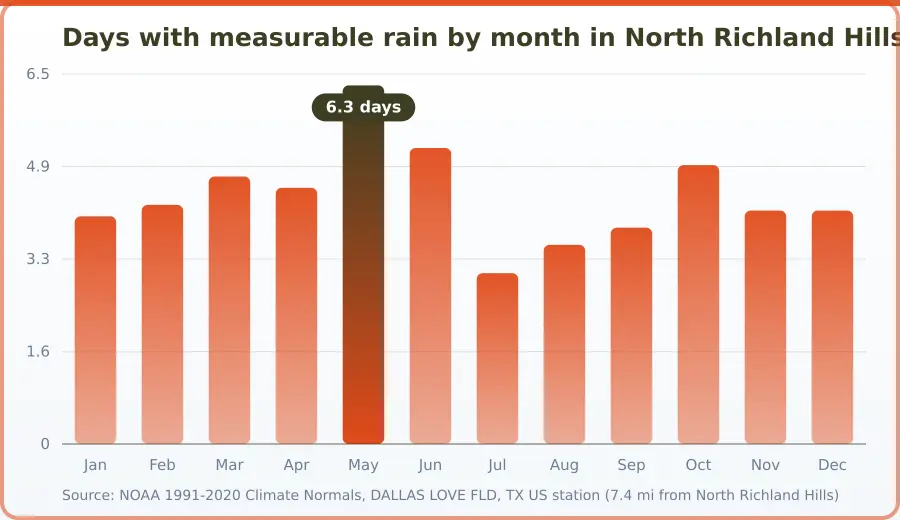
| Period | Days with measurable rain by month (days) |
|---|---|
| Jan | 4 |
| Feb | 4.2 |
| Mar | 4.7 |
| Apr | 4.5 |
| May | 6.3 |
| Jun | 5.2 |
| Jul | 3 |
| Aug | 3.5 |
| Sep | 3.8 |
| Oct | 4.9 |
| Nov | 4.1 |
| Dec | 4.1 |
Source: NOAA 1991-2020 Climate Normals, DALLAS LOVE FLD, TX US station (7.4 mi from North Richland Hills). Retrieved October 5, 2026.
Yellow Jacket Control Year-Round in North Richland Hills
Spring: Nest Establishment
As temperatures warm past the average last freeze on March 2, yellow jackets emerge from winter dormancy and begin building new nests in eaves, attics, and ground cavities across North Richland Hills. Early spring intervention prevents colonies from establishing and growing through summer. Dill connects you with local providers who identify and remove nests before populations explode.
Summer: Peak Aggression
North Richland Hills averages over 22 days above 90°F each month from June through August, creating ideal breeding conditions for yellow jackets. Mature colonies become highly aggressive around food sources, garbage, and outdoor gatherings. Local providers accessed through Dill offer rapid response to active nests and protective measures for patios, pools, and dining areas.
Fall: Increased Foraging
Before the first autumn freeze arrives around November 29, yellow jackets intensify their search for sugary foods and protein, making them bolder around homes and commercial spaces. This aggressive late-season activity puts residents and workers at greater risk of stings. Dill helps you connect with providers who can remove nests and secure vulnerable entry points before cold weather arrives.
Winter: Dormancy and Shelter-Seeking
From December through early February, North Richland Hills experiences multiple freezing nights that force surviving yellow jackets into dormancy, though some queens seek refuge inside walls, crawl spaces, and attics. Winter removal is less urgent but still necessary to prevent spring reactivation. Dill's provider network can locate overwintering colonies and eliminate them before spring warmth triggers renewed activity.
Yellow Jacket Control FAQs — North Richland Hills, TX
Yellow jacket control typically begins with inspection to locate nests, which may be in eaves, ground cavities, or wall voids. The independent local provider will assess the infestation size and location, then apply targeted treatment to eliminate the colony. Depending on nest placement and severity, removal or destruction methods vary. Your provider will explain the specific approach for your situation and answer safety questions before proceeding.
Dill Pest Control connects you with independent local providers serving North Richland Hills who can often respond to yellow jacket problems promptly. Since these are active insects and pose a stinging risk, providers prioritize urgent calls. Contact Dill with details about your infestation's location and activity level, and they'll match you with a nearby provider available to address it soon.
Yellow jacket control pricing depends on nest location, colony size, and accessibility. Ground nests may differ in cost from aerial or wall cavity treatments. Whether removal or chemical treatment is used also influences the price. Each independent provider sets their own rates. Contact a local provider through Dill for a quote specific to your property and infestation details.
Before treatment, your provider will give you specific prep instructions. Generally, you should keep children and pets away from the treatment area and secure any outdoor items if ground nesting is involved. If nests are near entry points, close doors and windows as directed. Your provider may ask you to stay indoors during application. Follow all guidance closely for your safety and the treatment's effectiveness.
After treatment, prevent new nests by removing food sources—secure garbage, clean up fallen fruit, and avoid leaving pet food outside. Seal cracks in walls, gaps under eaves, and other entry points. Eliminate standing water and maintain landscaping to reduce shelter spots. Your provider can recommend additional preventive measures specific to your property. Regular inspection helps catch early nesting before infestations grow.
Yellow jackets are most active in spring and summer in the North Texas region, when they build nests and forage aggressively. Activity peaks as temperatures warm, and colonies grow larger. While fall and winter see reduced foraging, nests may persist and dormant queens can emerge. If you spot yellow jackets or suspect nesting any time of year, contact a local provider promptly to assess the threat.
Homeowner Safety Toolkit
Verify Your North Richland Hills, TX Pest Control Company
Before you hire anyone, use these independent national resources to confirm credentials, standards, and track record.
EPA
The federal government's own guide to choosing a pest control method and using pesticides safely around your home and family.
Pesticide Safety GuideNPMA
QualityPro is the pest control industry's own accreditation program, endorsed by the National Pest Management Association. Find and verify a company's accreditation before you hire.
Find a Certified ProAAPCO
The national association of state pesticide regulators. Use it to find your own state's licensing agency and confirm a company's applicator license is current.
Find Your State AgencyRelated Services
Dealing with yellow jackets in North Richland Hills? Get fast, targeted treatment from a local provider.
Call (817) 993-4445Areas We Serve in North Richland Hills, Texas
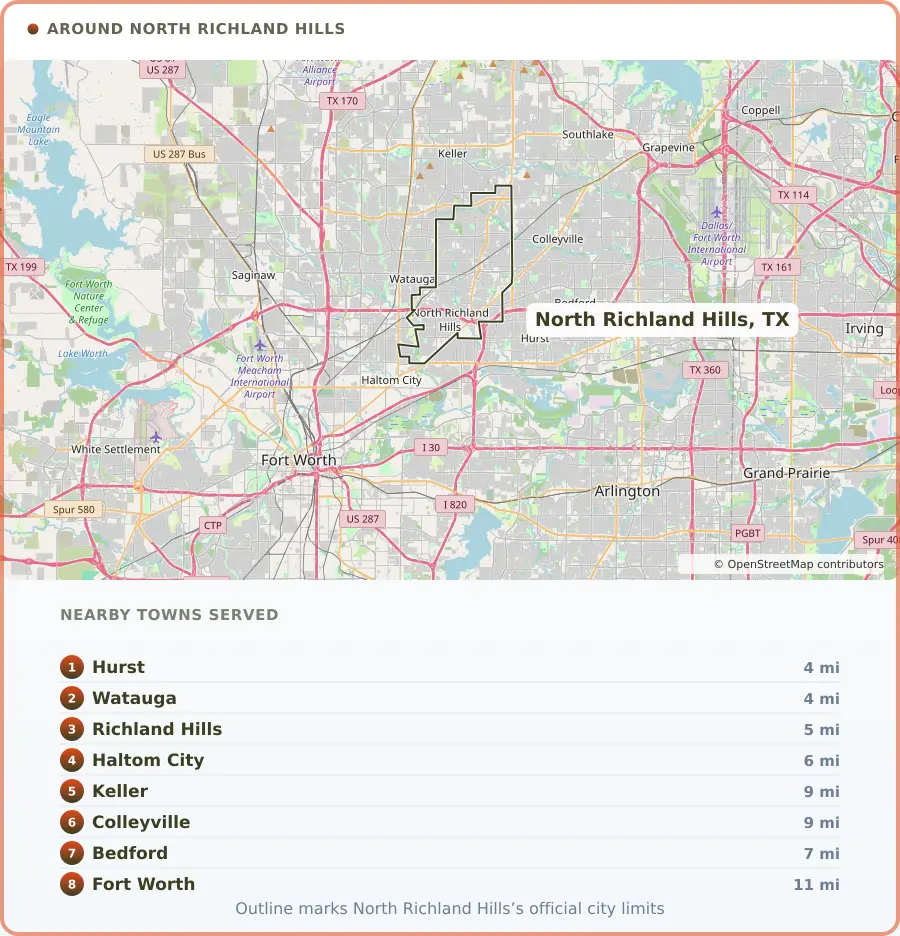
Coverage centres on North Richland Hills, TX and reaches 8 surrounding communities. Response time is what matters most in the hours after a problem is found, so knowing the ground is part of the job.
North Richland Hills, TX Information
Tucked between Fort Worth and the heart of the Dallas-Fort Worth metroplex, North Richland Hills, TX, is home to roughly 71,000 residents who enjoy settled, tree-lined neighborhoods with big-city access close by. Established pockets like Smithfield and Diamond Loch give the city a lived-in, familiar character, while the retail corridor along Boulevard 26 keeps daily errands within easy reach.
The local economy leans on healthcare, education, and retail trade, with North Hills Hospital, Birdville ISD, and national chains such as Walmart, Target, and Home Depot anchoring steady employment. Many residents commute into the broader DFW job market, but the city holds its own too, drawing families to NRH2O Family Water Park each summer and supporting a growing mix of logistics, manufacturing, and professional services.
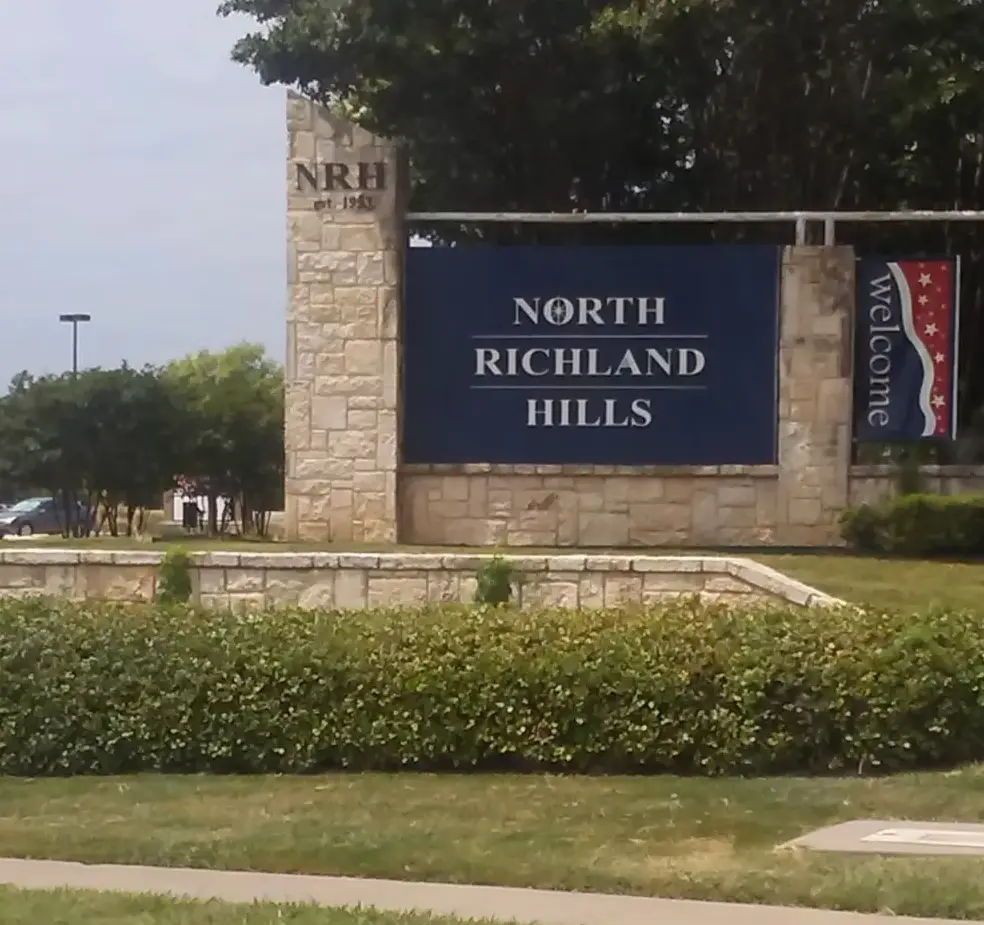
Photo: Smarty9108, CC BY-SA 4.0