

Stink Bug Control in North Richland Hills, TX
North Richland Hills residents deal with year-round pest pressure that extends well beyond the region's better-known threats like fire ants and termites. Stink bug infestations can become particularly problematic during warmer months, when these seasonal invaders seek shelter in homes and outbuildings, and Dill Pest Control connects you with local pest control providers in North Richland Hills who understand how to manage them effectively. A quick, local response helps reduce damage to your property and prevents these pests from establishing larger populations indoors.
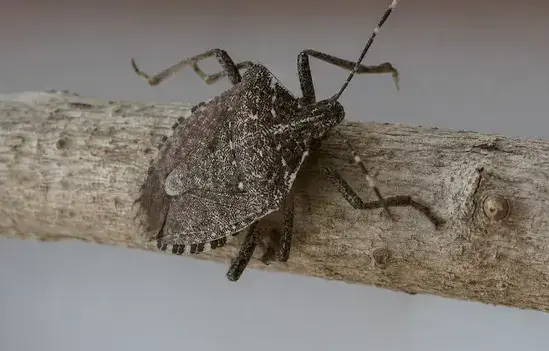
When do stink bugs come indoors in North Richland Hills, TX?
Two things decide when you see a pest: what the species does, and what the weather here actually does. Below is the published guidance on the first, set against this city's own measured climate.
“Adults begin to search for overwintering sites starting in September through October.” Penn State Extension
“Adults emerge in the spring (late April to mid-May)” Penn State Extension
Two windows rather than one, then: into the building through autumn, back out the following spring.
North Richland Hills's first autumn freeze averages November 29 and its last spring freeze March 2, so the September-October move indoors here runs ahead of the cold rather than after it.Source: NOAA 1991-2020 Climate Normals, DALLAS LOVE FLD, TX US station (7.4 mi from North Richland Hills)
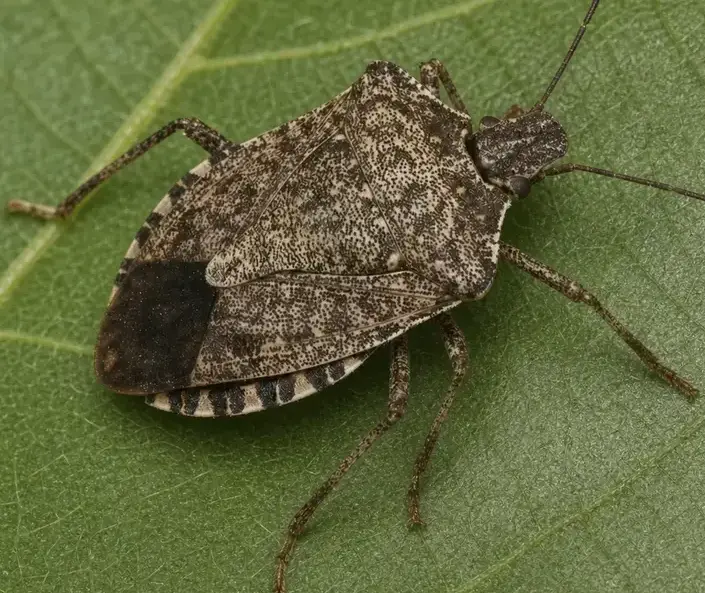
Stink Bug Control North Richland Hills Homeowners Trust
North Richland Hills residents face year-round pest pressure that shifts with the seasons, and stink bugs join the roster of invaders that can make homes uncomfortable, especially as temperatures warm. These shield-shaped insects arrive in force during spring and summer, seeking shelter in homes and gardens, and while North Texas winters slow their activity, the region's climate allows populations to survive and resurge each year. Homeowners across North Richland Hills—from Smithfield to Diamond Loch and beyond—recognize that stink bug control is not a one-time fix but an ongoing concern that requires prompt, professional attention to prevent costly infestations and property damage.
Dill Pest Control connects North Richland Hills property owners with local independent pest control providers who specialize in stink bug removal and exclusion. These providers assess your home or business for entry points, signs of active nesting, and conducive conditions that attract stink bugs, then carry out targeted control measures and follow-up treatments designed to interrupt their lifecycle. Rather than a single spray-and-leave approach, the providers in our network focus on thorough inspection, strategic intervention, and monitoring to keep stink bug populations in check year after year. When you contact Dill, you're matched quickly with a local provider ready to address your stink bug problem with the attention North Richland Hills homes deserve.
Why North Richland Hills Homeowners Choose Dill Pest Control
Fast Stink Bug Control Response
Stink bug infestations demand quick action. Dill connects you with local providers ready to address stink bug problems promptly, minimizing damage to your home and landscaping before populations spread.
Thorough Stink Bug Treatment Plans
Effective stink bug control requires targeted strategies tailored to your property. Independent providers in our network develop comprehensive stink bug treatment approaches, addressing entry points and seasonal activity patterns specific to your situation.
Clear Communication on Stink Bugs
Understanding your stink bug problem and treatment plan matters. Dill partners with local providers who explain stink bug behavior, prevention steps, and what to expect during and after service—keeping you informed throughout.
Spring and Summer Stink Bug Peaks
North Texas springs and summers bring heightened stink bug activity as temperatures warm. Dill helps North Richland Hills homeowners connect with independent local providers who understand seasonal timing and can act before infestations intensify on your property.
How Our Stink Bug Treatment Works
Schedule Your Stink Bug Control Visit
Contact Dill Pest Control and describe your stink bug problem. We'll connect you with a local North Richland Hills pest control provider who can assess your property and confirm stink bug activity.
Inspect and Diagnose Stink Bug Entry Points
The provider will inspect your home's exterior and interior for stink bug hiding spots, entry points, and seasonal congregation areas. This assessment guides a targeted stink bug control strategy specific to your property.
Execute Stink Bug Control and Monitor
The local provider will apply stink bug control measures and establish a follow-up schedule to monitor activity. Spring and summer intensification in North Texas means ongoing stink bug pressure—follow-up visits help catch reinfestation early.
Ready to get rid of stink bugs in North Richland Hills? A local provider can get started fast.
Call (817) 993-4445Stink Bug Control Across North Richland Hills
Stink bug activity in North Richland Hills fluctuates with the seasons, and the region's mix of established neighborhoods and newer developments creates different control challenges. Mature trees and landscaping in older areas like Smithfield can attract and harbor stink bugs during warmer months, while the generally open layouts of newer subdivisions such as Diamond Loch may expose properties to higher seasonal pressure as bugs seek shelter and food sources. Spring and summer bring peak activity as stink bugs emerge and move between outdoor spaces and homes, making early detection and prevention critical during these months.
Year-round pest pressure in North Richland Hills—particularly the active termite and rodent concerns that persist in the North Texas climate—often means properties benefit from comprehensive pest management rather than single-issue approaches. Local pest control providers connected through Dill can assess your property's unique layout, vegetation, and construction to recommend targeted stink bug control strategies suited to your neighborhood's specific conditions. Whether you're in an area with dense tree cover or newer construction, a local provider familiar with North Richland Hills can help protect your home before infestations take hold.
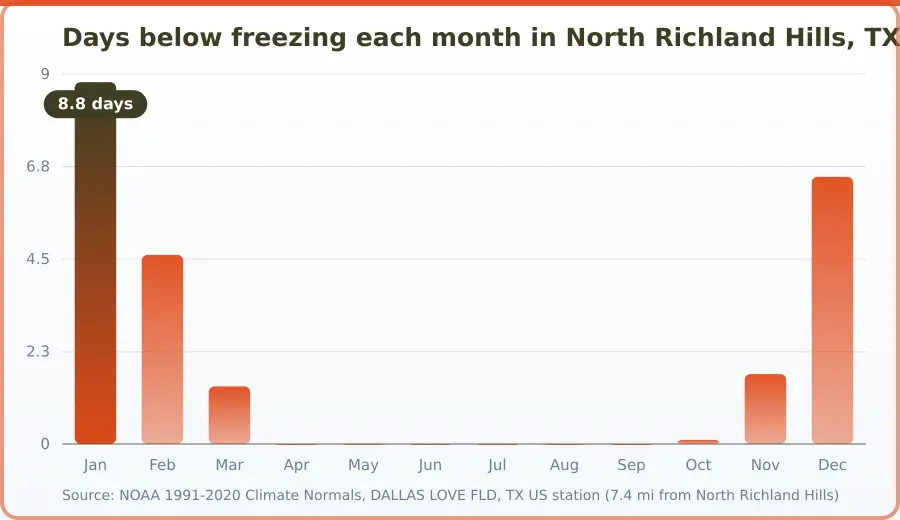
| Period | Freezing days per month (days) |
|---|---|
| Jan | 8.8 |
| Feb | 4.6 |
| Mar | 1.4 |
| Apr | 0 |
| May | 0 |
| Jun | 0 |
| Jul | 0 |
| Aug | 0 |
| Sep | 0 |
| Oct | 0.1 |
| Nov | 1.7 |
| Dec | 6.5 |
Source: NOAA 1991-2020 Climate Normals, DALLAS LOVE FLD, TX US station (7.4 mi from North Richland Hills). Retrieved October 5, 2026.
Stink Bug Control Year-Round in North Richland Hills
Spring: Emergence & Entry
As temperatures warm after the average last freeze on March 2, stink bugs emerge from winter shelter and seek food sources on awakening vegetation. Homeowners often spot them on windows and siding. Dill connects you with local providers who can assess entry points and discuss management strategies before populations peak.
Summer: Peak Activity
North Richland Hills averages over 22 days above 90°F in June alone, driving stink bugs to actively feed on garden plants and congregate near structures. Populations expand rapidly during peak warmth. Local providers Dill connects you with can recommend monitoring and control approaches tailored to your property's vulnerability during summer's heaviest pest pressure.
Fall: Shelter-Seeking Behavior
In autumn, stink bugs shift from feeding to seeking warm overwintering sites indoors—a critical control window before the first average freeze on November 29. Detection and exclusion are most effective now. Dill helps you connect with independent providers who specialize in fall preparation to reduce indoor invasions before cold drives them inside for the season.
Winter: Indoor Management
Freezing nights from December through February force stink bugs into dormancy within wall voids and attics, making winter removal challenging. Early-season prevention outperforms late intervention. Dill connects you with local providers who can assess winter harboring sites and plan spring follow-up, breaking the cycle before emergence warming begins again.
Stink Bug Control FAQs — North Richland Hills, TX
Stink bug control typically includes a thorough inspection of your home's exterior, entry points, and areas where these insects congregate. The independent local provider will identify infestations, assess damage or staining, and apply targeted treatments to eliminate active populations and prevent re-entry. Treatment methods vary by situation and provider.
Dill Pest Control connects you with independent local providers in North Richland Hills who can typically respond to stink bug infestations within a short timeframe. Contact a provider directly to discuss your situation and availability. Response times vary by provider and current service demand.
Pricing for stink bug control depends on the size of your home, severity of infestation, treatment method needed, and whether follow-up visits are recommended. Independent providers in North Richland Hills will assess your specific situation and provide pricing details during an inspection or initial consultation.
Your provider will give you specific preparation instructions, which may include removing clutter from entry points, clearing vegetation near your home's foundation, and ensuring access to affected areas. In neighborhoods like Smithfield and Diamond Loch, this often means trimming tree branches away from rooflines and sealing gaps around windows and doors before treatment.
After stink bug control, seal cracks and gaps around windows, doors, siding, and utility openings where these insects enter. Remove outdoor lighting that attracts them, keep vegetation trimmed back from your home, and maintain screens. Your provider can recommend additional prevention steps tailored to your North Richland Hills property.
Stink bugs become increasingly active as temperatures warm in spring and summer, seeking shelter indoors during cooler months. In the North Texas area, fall and early winter are critical times to address infestations before they move inside. Contact a provider as soon as you notice activity to prevent larger problems.
Homeowner Safety Toolkit
Verify Your North Richland Hills, TX Pest Control Company
Before you hire anyone, use these independent national resources to confirm credentials, standards, and track record.
EPA
The federal government's own guide to choosing a pest control method and using pesticides safely around your home and family.
Pesticide Safety GuideNPMA
QualityPro is the pest control industry's own accreditation program, endorsed by the National Pest Management Association. Find and verify a company's accreditation before you hire.
Find a Certified ProAAPCO
The national association of state pesticide regulators. Use it to find your own state's licensing agency and confirm a company's applicator license is current.
Find Your State AgencyRelated Services
Dealing with stink bugs in North Richland Hills? Get fast, targeted treatment from a local provider.
Call (817) 993-4445Areas We Serve in North Richland Hills, Texas
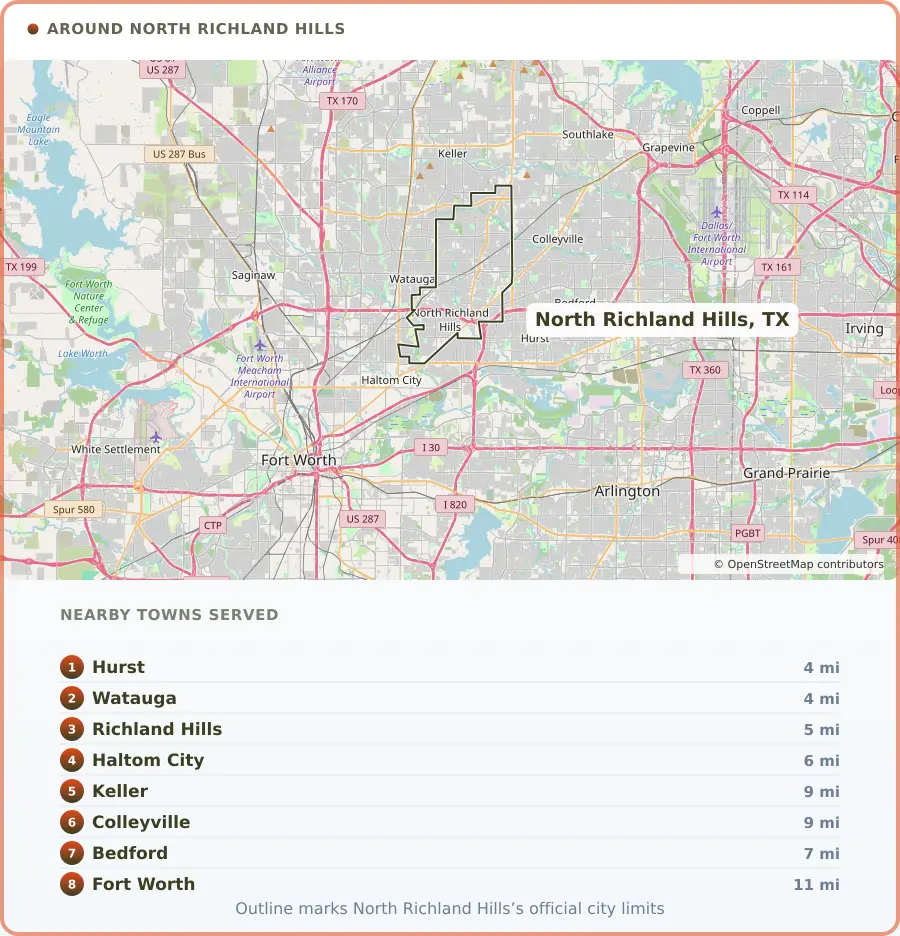
Coverage centres on North Richland Hills, TX and reaches 8 surrounding communities. Response time is what matters most in the hours after a problem is found, so knowing the ground is part of the job.
North Richland Hills, TX Information
Tucked between Fort Worth and the heart of the Dallas-Fort Worth metroplex, North Richland Hills, TX, is home to roughly 71,000 residents who enjoy settled, tree-lined neighborhoods with big-city access close by. Established pockets like Smithfield and Diamond Loch give the city a lived-in, familiar character, while the retail corridor along Boulevard 26 keeps daily errands within easy reach.
The local economy leans on healthcare, education, and retail trade, with North Hills Hospital, Birdville ISD, and national chains such as Walmart, Target, and Home Depot anchoring steady employment. Many residents commute into the broader DFW job market, but the city holds its own too, drawing families to NRH2O Family Water Park each summer and supporting a growing mix of logistics, manufacturing, and professional services.
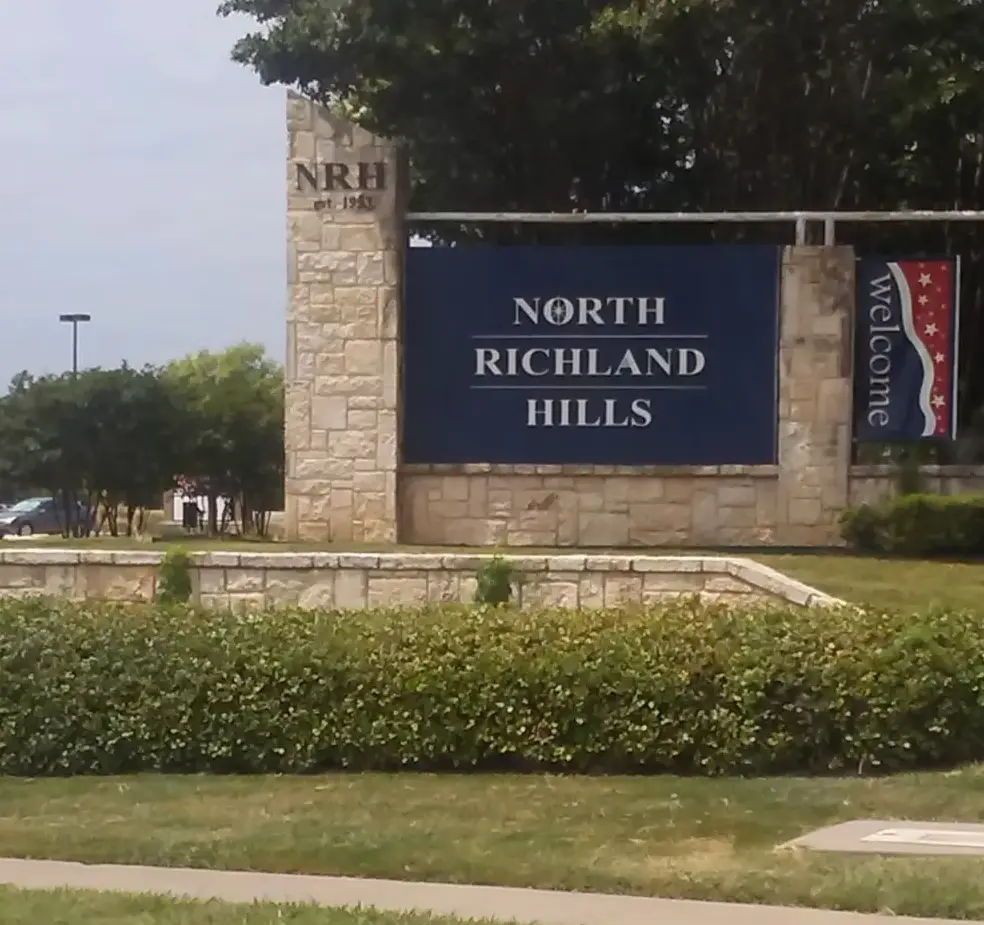
Photo: Smarty9108, CC BY-SA 4.0